
Musculoskeletal Medicine - Ultrasound-Guided Injections

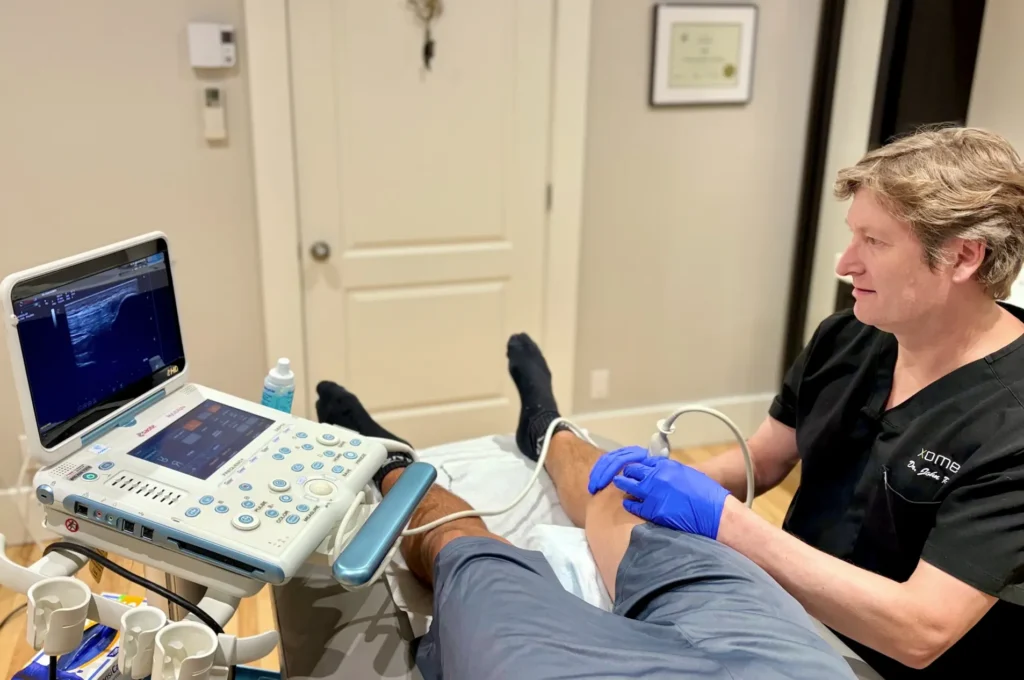
At our Knowlton (Brome Lake) clinic, every cortisone shot and knee injection is performed under ultrasound guidance. Musculoskeletal ultrasound provides real-time images of many joints, tendons, bursae and other superficial structures. It can help pinpoint the source of pain, and it lets the doctor see both the needle and the targeted structure during an injection or aspiration.
Your questions, our answers.
Everything you need to know about
the treatment.
WHY CHOOSE DR. ROWEN, AND HOW DOES THE ASSESSMENT WORK?
At XOMED Clinic, musculoskeletal injections are performed under ultrasound guidance. After a medical assessment, Dr. John Rowen determines whether a procedure is indicated and which option best suits your condition, your medical history and your goals.
- Review of your symptoms, medical history and treatments already tried
- Targeted physical exam of the painful area
- Musculoskeletal ultrasound when relevant
- Review of any available X-rays or MRI results
- Discussion of the options, possible benefits, limits and precautions
If the diagnosis is clear enough and an injection is appropriate, treatment can often be done at the same appointment.
WHAT INJECTION OPTIONS ARE AVAILABLE?
Cortisone injections
Cortisone is a powerful anti-inflammatory that helps reduce inflammation, swelling and pain. It may be indicated for certain cases of tendinitis, bursitis, synovitis and sprains. Relief may begin within 48 to 72 hours, with the full effect after about two weeks. However, it does not repair cartilage or cure osteoarthritis. Whether injections are appropriate, and how often, must be assessed individually; a minimum interval of three months is generally recommended.
Hyaluronic acid viscosupplementation
Hyaluronic acid is a natural component of joint fluid that helps lubricate the joint and absorb shock. Mainly used for knee osteoarthritis, viscosupplementation involves injecting a hyaluronic acid gel to reduce pain and improve joint function. Benefits may appear after about four weeks and reach their full effect around eight weeks. However, it does not rebuild cartilage, and its effectiveness varies from patient to patient. A repeat injection can generally be considered after 6 to 12 months, depending on how you respond to treatment.
PRP – Platelet-rich plasma
PRP is a platelet concentrate obtained by spinning a sample of the patient’s own blood in a centrifuge. Platelets release factors that take part in the body’s natural tissue repair processes and may help reduce pain and inflammation. PRP may be considered for certain chronic tendinopathies, tendon tears, sports injuries and some cases of knee osteoarthritis. Improvement is gradual and can continue for several months, sometimes up to about six months. However, PRP does not simply regenerate a joint or a tendon.
WHY USE ULTRASOUND GUIDANCE?
Ultrasound guidance lets the doctor see the anatomy, locate the target and follow the needle in real time. It makes the procedure more precise by confirming that the treatment is delivered exactly where intended.
WHICH INJECTION IS RIGHT FOR ME?
There is no single best injection for everyone. The choice depends on the cause of your pain, the degree of osteoarthritis or inflammation, whether there is swelling, your activity level, previous treatments, your medical history and your goals.
HOW SOON CAN I FEEL BETTER?
It depends on the condition and the treatment. Cortisone can work within a few days when inflammation is present. Hyaluronic acid and PRP usually have a more gradual effect over the following weeks.
HOW LONG CAN THE EFFECTS LAST?
Duration varies widely from one person to another. Some people get relief for several weeks or months, while others respond little or not at all to treatment.
CAN AN INJECTION REBUILD CARTILAGE?
No. None of the injections currently offered has been shown to reliably regrow normal joint cartilage in a knee with osteoarthritis. The goal is to reduce symptoms, improve function and help you stay active.
DOES IT HURT?
Most patients tolerate musculoskeletal injections well. Brief discomfort from the needle and temporary tenderness after the procedure are possible.
CAN I RESUME MY ACTIVITIES AFTER THE INJECTION?
Recommendations vary depending on the area treated and the procedure. You will receive personalized instructions about activity, exercise and certain medications after your treatment.