
ROSACEA

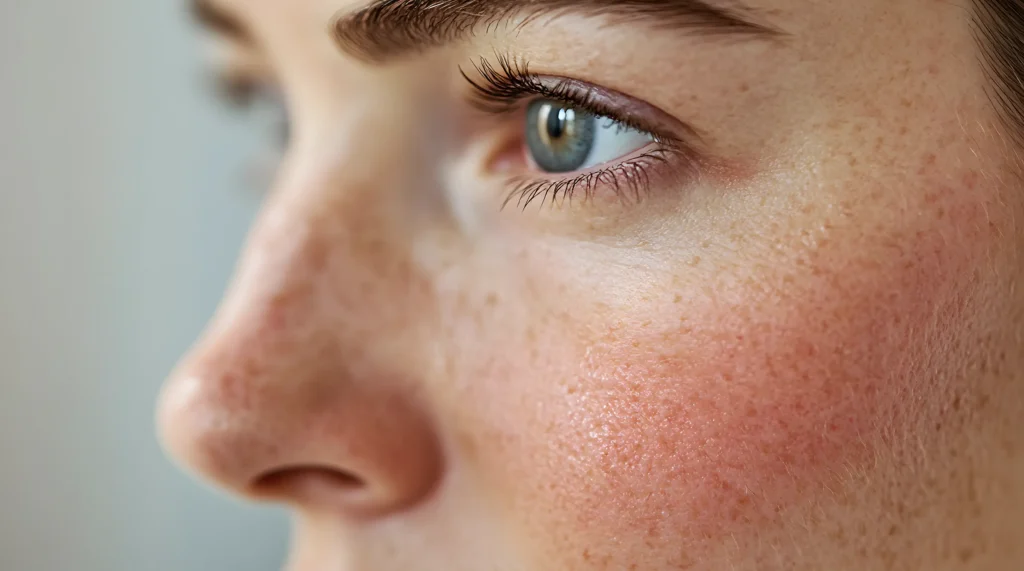
Facial redness and rosacea are chronic skin conditions affecting 1% to 10% of the population, mostly fair-skinned women aged 30–50, though men can also be affected.
Your questions, our answers.
Everything you need to know about
the condition.
WHAT IS IT?
Rosacea is a chronic inflammatory skin condition that primarily affects the face (cheeks, nose, forehead, chin). It presents as persistent redness, flushing, sometimes burning sensations, and can progress to red bumps or pustules. In rare cases, it can cause skin thickening, especially on the nose (rhinophyma).
Diffuse redness is a visible form of rosacea, characterized by small, dilated blood vessels (telangiectasias) on the skin’s surface. Some people only experience this symptom, while others develop the more extensive manifestations of rosacea.
In summary, diffuse redness refers to the vascular aspect of rosacea, while rosacea encompasses a wider range of forms, sometimes more severe.
WHO CAN DEVELOP ROSACEA?
Rosacea mainly affects fair skin, especially of Northern European descent, and often have a hereditary factor. They affect both women and men, although severe forms are more common in men.
Contrary to popular belief, alcohol is not the cause of the condition. It can worsen symptoms, but terms like brandy nose or gin blossoms to describe advanced rosacea are misleading.
WHAT ARE THE TRIGGERS OF ROSACEA?
These conditions result from the fragility of small blood vessels, often linked to genetic predisposition. They may be aggravated by several factors:
- Environment: sun, cold, heat, wind, pollution.
- Diet and drinks: alcohol, spices, coffee, chocolate, hot beverages.
- Hormonal factors: pregnancy, menopause, contraceptives.
- Lifestyle: stress, strong emotions, sedentary habits, irritating skincare products.
Fortunately, some simple measures help limit symptoms: protect your skin from cold and sun, use gentle skincare, and adapt your diet and lifestyle.
ROSACEA: CURE OR LONG-TERM MANAGEMENT?
Rosacea is a chronic condition — it cannot be cured, but it can be effectively managed. With a personalized approach — combining medical treatments, dermatological care, lifestyle adjustments, and aesthetic technologies — symptoms can be reduced, flare-ups controlled, and skin appearance visibly improved.
Key management strategies include:
- Daily sun protection
- Identifying and avoiding triggers (sun, spicy foods, alcohol, extreme temperatures, stress)
- Gentle skincare suited for sensitive skin
- Regular hydration
With professional follow-up and simple daily habits, many patients regain comfort and confidence while maintaining skin quality long-term.
HOW TO TREAT ROSACEA?
Dr. Rowen provides personalized care based on the type and severity of the condition.
- Topical creams: medications such as metronidazole or azelaic acid to reduce inflammation and redness; antioxidant-based care (vitamin C, retinol) to improve skin texture.
- Oral medications: antibiotics (doxycycline, tetracycline) for more severe cases.
- Aesthetic technologies:
- Vascular laser (Nd:YAG): targets dilated vessels.
- IPL (Intense Pulsed Light): reduces diffuse redness and stimulates collagen.
- MicroBotox (in select cases): helps reduce inflammation and skin reactivity.
Through this combination of medical care and advanced technologies, it is possible to reduce symptoms, improve the skin’s appearance, and provide lasting comfort.