
VARICOSE VEINS AND SPIDER VEINS

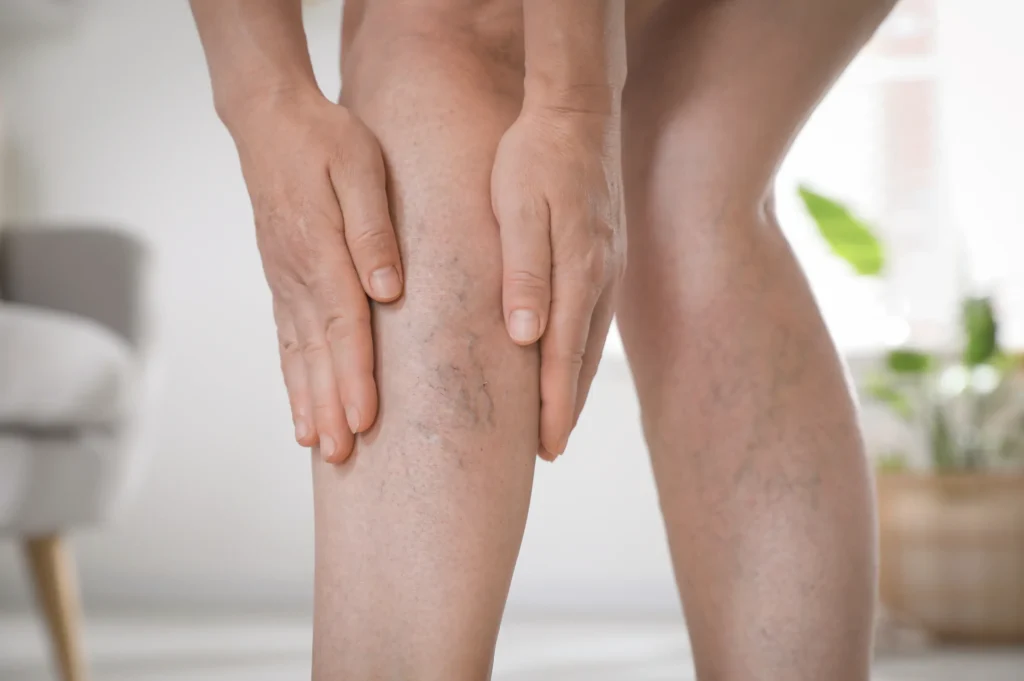
About 60% of people experience vein problems at some point in their lives. Up to 80% of these individuals suffer from heaviness, fatigue, and pain — and many avoid showing their legs due to visible varicose veins. Sclerotherapy is an effective and minimally invasive solution to treat these concerns.
Your questions, our answers.
Everything you need to know about
the condition.
VARICOSE VEINS AND SPIDER VEINS – WHAT ARE THEY?
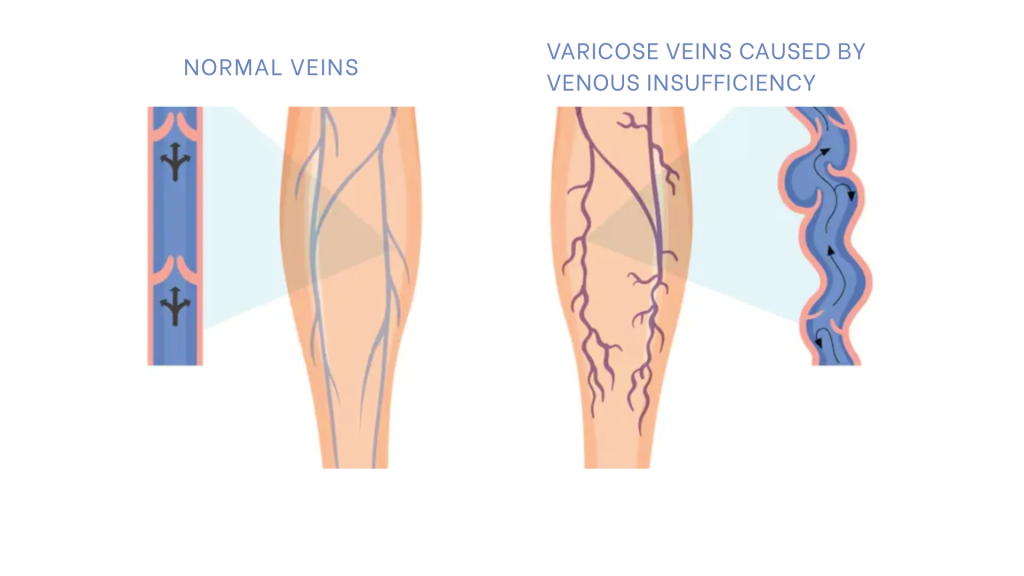
Varicose veins are dilated, twisted veins — most often in the legs — where blood doesn’t flow properly back to the heart. They can feed smaller veins (spider veins), which also become visible and uncomfortable. This condition, related to venous insufficiency, tends to worsen over time.
Without treatment, varicose veins progress and aggravate symptoms such as pain, heaviness, cramps, itching, fatigue, and swelling. In the long term, they can cause skin complications (brown spots, chronic wounds). Some insufficiencies also affect deeper veins, invisible to the eye, detectable only by Doppler ultrasound.
A specialized medical evaluation with imaging is therefore essential before any treatment, to identify the cause and offer the most appropriate care.
WHO IS AT RISK OF DEVELOPING VARICOSE VEINS?
Varicose veins appear when the valves in the veins — especially in the legs — no longer function properly. Blood then pools under the effect of gravity, causing vein walls to dilate and the network to deteriorate progressively. Venous insufficiency is a progressive disease: without treatment, the veins enlarge, and symptoms worsen.
Risk factors include:
- Heredity: strong family predisposition.
- Age: loss of elasticity in vein walls and less effective valves.
- Hormonal changes: pregnancy, menopause, contraceptives.
- Pregnancy: increased pressure on leg veins.
- Sedentary lifestyle: weak muscle activity, slowed circulation.
- Excess weight: added pressure, especially abdominal.
- Prolonged standing or sitting: limits venous return.
- Heat exposure: hot baths, saunas, sun encourage dilation of veins.
The risk is higher in women, particularly during pregnancy, menopause, or contraceptive use.
Early medical evaluation helps identify the cause and slow progression of venous insufficiency.
WHAT ARE THE SYMPTOMS OF VARICOSE VEINS?
Varicose veins and venous insufficiency in the legs may cause numerous symptoms: dull or diffuse pain, heaviness, cramps, fatigue, restless legs, itching, tingling, warmth, pain along certain veins, swelling (edema), as well as significant cosmetic concerns.
At more advanced stages, venous disease can cause more serious complications: skin changes, redness, brown spots, eczema, chronic wounds, hard-to-heal ulcers, and sometimes bleeding due to varicose rupture.
It’s important to note that the size of visible veins does not always reflect disease severity. Even small spider veins can be linked to significant venous insufficiency, detectable only by Doppler ultrasound.
A complete medical evaluation with Doppler ultrasound is therefore essential before any treatment. Dr. Rowen can perform this exam directly in the clinic to target the cause and recommend the appropriate treatment.
HOW CAN VARICOSE VEIN SYMPTOMS BE RELIEVED?
Varicose veins are irreversible: only medical treatments such as sclerotherapy or ablation can correct the problem. However, several simple measures can relieve symptoms and slow their progression:
- Compression stockings: promote venous return and reduce heaviness.
- Leg elevation: helps decrease blood pooling and vein pressure.
- Regular exercise (walking, cycling, swimming, stretching): activates the calf muscle pump and boosts circulation.
- Avoid prolonged positions: alternate sitting/standing and move regularly.
- Maintain a healthy weight: decreases pressure on veins.
- Proper footwear: good support and moderate heel for improved venous return.
- Limit heat exposure (hot baths, saunas, sun): heat dilates veins and worsens symptoms.
WHAT ARE THE TREATMENTS FOR VARICOSE VEINS?

The goal of treatment is to eliminate diseased veins so blood can flow through healthy ones, efficiently returning to the heart. Doppler ultrasound is now an essential tool for accurate diagnosis and guiding treatment choice.
- Sclerotherapy: the most common treatment, involves injecting a sclerosing solution (liquid or foam) into the vein to close and eliminate it.
- Surface sclerotherapy: for spider veins and small visible veins.
- Ultrasound-guided sclerotherapy: for deeper or larger veins, performed under ultrasound guidance.
This is a minimally invasive, well-tolerated procedure that allows a quick return to normal activities. Wearing compression stockings may be recommended afterward to enhance results.
In more complex cases, endovenous catheter treatments (laser or radiofrequency) may be required.
Conventional surgery (stripping) is now rarely used, as it is more invasive and requires longer recovery.
A medical evaluation is essential to ensure safe and personalized treatment. Only a physician can diagnose venous disease and determine the proper care plan, including sclerotherapy.